Patio door locks are specialized locking systems designed for exterior-facing glass door applications such as sliding patio doors, hinged patio doors, and French doors. Unlike standard interior locks, they must provide a stronger combination of security, weather resistance, smooth operation, and long-term durability, especially because patio doors often include large glass areas, slim frame profiles, and frequent daily access. These characteristics make patio doors both convenient and visually appealing—but also a common focus in residential and light-commercial security planning.
The right patio door lock does more than simply keep the door closed. It should match the door type, resist forced entry, integrate with the frame and handle system, and remain reliable under repeated use and outdoor exposure. In many modern projects, buyers are also considering whether the lock should support smart access features such as app control, remote status monitoring, temporary user credentials, or access logs. For a smart lock brand like AKADA Smart, this makes patio door lock selection not only a hardware decision, but also a broader access-control and user-experience decision.
Below is a structured guide to the different types of patio door locks, how they work on sliding and hinged doors, which features matter most for security and convenience, and how proper installation and hardware selection can significantly improve overall patio door protection.
🚪 What Are the Different Types of Patio Door Locks and How Do They Work?
Patio door locks vary according to the door structure. The first step is to distinguish whether the application uses a sliding patio door or a hinged patio / French door, because the locking mechanisms differ significantly.
Sliding patio door locks
Sliding patio doors move horizontally along a track, so their locks are designed to prevent the active panel from being slid open or lifted from the frame.
Common sliding patio door lock types include:
Hook locks
Hook locks use a metal hook that engages into a keeper or strike inside the frame.
Their main advantages are:
- stronger resistance to sliding force
- better engagement than a simple latch
- common use in aluminum and uPVC sliding systems
Because the hook catches into the frame rather than merely resting against it, it usually provides more secure holding than a basic latch.
Latch locks
Latch locks are simpler locking systems that engage a frame receiver.
They are commonly used in:
- basic residential sliding doors
- older patio door systems
- standard handle-integrated locksets
They are convenient, but often less secure than hook-based or multi-point systems.
Cylinder key locks
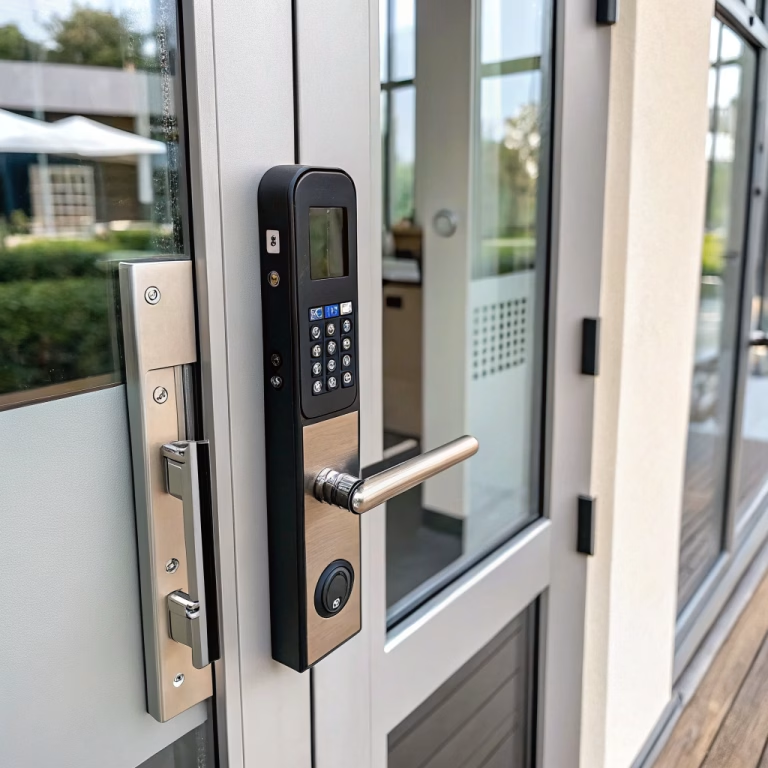
These locks are integrated into the patio door handle or lock body and allow key-controlled entry from outside.
Typical benefits include:
- controlled external access
- familiar locking behavior
- straightforward mechanical operation
However, cylinder quality matters. Lower-grade cylinders can become the weak point of the whole system.
Foot bolts or drop bolts
These are secondary locking devices installed near the bottom of the door panel and engage into the track or floor.
They provide:
- added security beyond the main lock
- improved panel stabilization
- useful secondary restraint for sliding systems
They are often used as a backup rather than the main daily lock.
Multi-point sliding locks
Some higher-performance sliding patio door systems use multi-point locks that engage at more than one location.
Advantages include:
- improved force distribution
- stronger resistance against prying
- better security for larger patio openings
For premium or security-focused projects, this is often one of the best choices.
Hinged patio door locks
Hinged patio doors, including French doors, swing open like standard side-hinged doors. Because of this, they can use more robust locking methods similar to entrance door systems.
Common hinged patio door lock types include:
Deadbolt locks
A deadbolt extends a solid bolt into the frame and provides stronger resistance to forced entry than a spring latch alone.
Main advantages:
- solid mechanical engagement
- improved pry resistance
- common use in hinged patio and French doors
Deadbolts remain one of the most recognized and reliable security solutions for hinged door systems.
Multi-point locking systems
These systems secure the door at multiple positions—typically top, center, and bottom—with one operating action.
Their benefits include:
- stronger frame engagement
- improved sealing and compression
- better security for tall or double-door systems
- excellent fit for French doors and premium patio doors
For many hinged patio applications, multi-point locking is considered the best overall standard.
Flush bolts
Flush bolts are often used on the inactive leaf of French doors.
They help:
- secure the secondary door panel
- stabilize double-door systems
- support the main locking function on the active leaf
Smart patio door locks
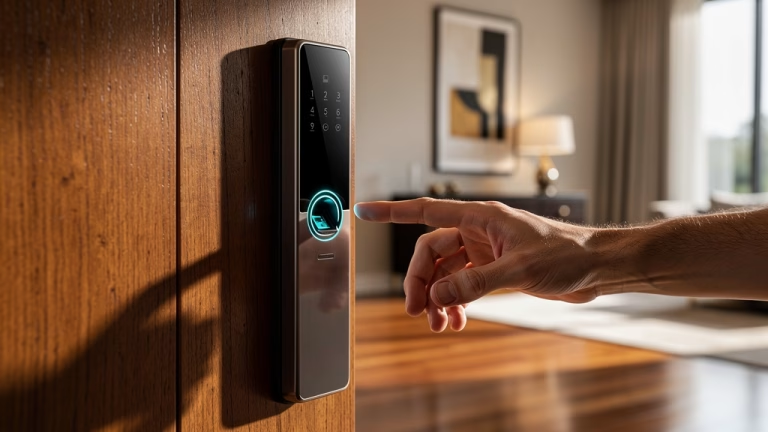
Smart patio door locks combine physical locking hardware with electronic control.
Depending on the application, they may support:
- app-based locking and unlocking
- Bluetooth or Wi-Fi access
- keypad or PIN entry
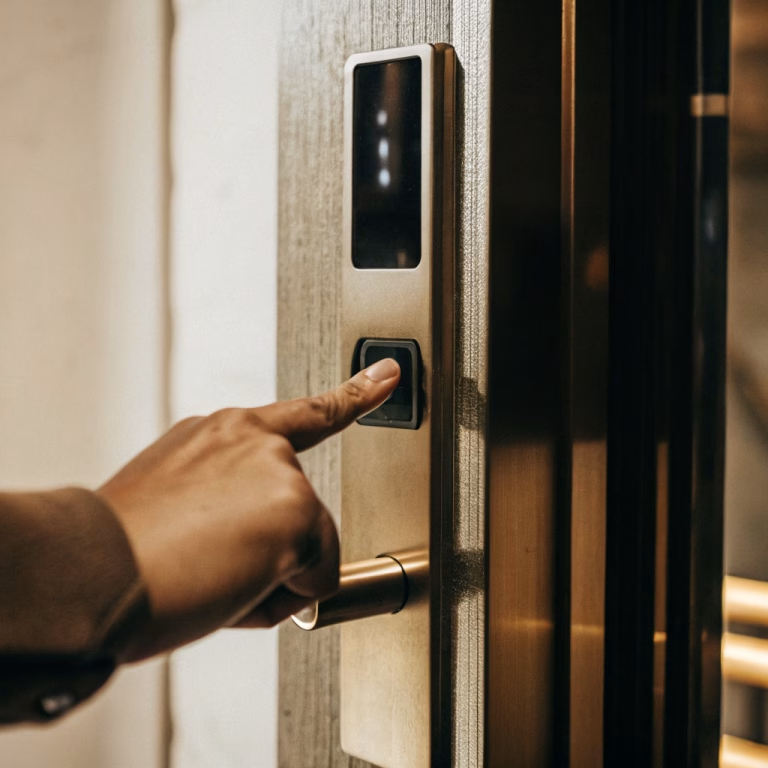
- fingerprint access
- temporary digital credentials
- real-time lock status
- access logs and alerts
Smart patio locks are increasingly relevant in:
- smart homes
- rental villas
- serviced residences
- hospitality applications
- premium residential projects
In these settings, the lock is no longer just a mechanical device. It becomes part of a connected access system.
🧭 How Do I Choose the Right Patio Door Lock for Security, Convenience, and Durability?
Choosing the right patio door lock starts with the door itself, but should end with the full use scenario.
Choose based on door type
Here is a practical comparison:
| Door Type | Recommended Lock Type | Why It Fits |
|---|---|---|
| Sliding Glass Door | Hook lock + anti-lift protection | Better resistance to sliding and lift-off |
| uPVC Sliding Patio Door | Multi-point sliding lock | Improved frame engagement and security |
| French / Hinged Patio Door | Deadbolt or multi-point lock | Stronger forced-entry resistance |
| Aluminum Patio Door | Mortise lock or smart lock system | Better integration with slim-frame structures |
This is the first decision layer. A lock designed for one patio door type is rarely ideal for another.
Choose based on security level
Different projects have different risk profiles.
Basic security
Suitable for:
- low-risk private patio access
- secondary-use doors
- simpler residential applications
Typical options:
- latch lock
- basic key cylinder
- standard hook lock
Medium security
Suitable for:
- standard residential exterior patio doors
- family homes
- moderate exposure environments
Typical options:
- hook lock with anti-lift features
- reinforced strike plate
- secondary bolt or auxiliary lock
Higher security
Suitable for:
- villas
- premium residences
- hospitality projects
- managed rental properties
Typical options:
- multi-point locking system
- reinforced frame hardware
- hardened steel components
- smart lock with monitoring features
Choose based on everyday convenience
Security only works if users engage it consistently.
Consider:
- whether the lock is easy to operate daily
- whether users prefer key access, thumb-turn operation, or smart entry
- whether temporary access is needed for staff, guests, or short-term users
- whether remote status visibility adds value
In practice:
- manual key locks are simple and proven
- handle-integrated locksets are convenient for everyday use
- smart locks offer the best flexibility when access management matters
A very secure lock that people dislike using tends to become a decorative suggestion.
Choose based on environmental exposure
Patio door locks are exposed to more environmental stress than interior locks.
Check whether the application faces:
- rain
- humidity
- coastal salt exposure
- direct sunlight
- frequent temperature changes
Recommended material approach:
- 304 stainless steel for standard outdoor durability
- 316 stainless steel for coastal or high-corrosion environments
- weather-resistant coatings for aluminum or mixed-metal hardware
- UV-stable exterior trim materials where relevant
🔍 What Features Should I Compare in Patio Door Locks?
The best patio door lock is not always the most complex one. The key is choosing the right combination of physical security, usability, and durability.
Key locks and cylinder quality
If the system uses keyed entry, compare:
- cylinder construction quality
- drill resistance
- pick resistance
- key management practicality
- replacement and servicing ease
The cylinder is often the most attacked part of a lockset, so quality matters.
Multi-point locking performance
Multi-point locking systems are especially valuable for:
- hinged patio doors
- French doors
- taller patio panels
- high-security residential projects
What to compare:
- number of locking points
- engagement depth
- handle operation smoothness
- compatibility with door profile
- long-term adjustment stability
Smart access options
Smart patio door locks may include:
- app control
- Bluetooth or Wi-Fi connectivity
- time-limited access credentials
- auto-locking
- tamper alerts
- audit trails
- remote lock status visibility
For ToB buyers, smart access is particularly useful where:
- multiple users must be managed
- remote property oversight matters
- rental turnover is frequent
- access traceability is beneficial
Weather resistance and build quality
Outdoor performance depends on:
- corrosion-resistant metal
- stable surface finishing
- sealed electronics where applicable
- durable gaskets
- proper handle and lock body sealing
For smart locks, check whether the product includes:
- outdoor-rated components
- battery protection design
- weather-resistant keypad or fingerprint sensor
- suitable IP-rated sections if relevant
Load and usage durability
Patio doors often see repeated daily use, especially in:
- family homes
- pool access areas
- hospitality spaces
- balconies and garden-entry doors
Look for:
- tested cycle life
- strong latch or bolt return
- stable handle operation
- reliable long-term alignment tolerance
Good patio hardware should be built for repetition, not just first-week enthusiasm.
🛡️ How Can I Improve the Security of My Patio Doors?
A patio door lock is only one part of the total security system. The surrounding hardware, frame, and installation method matter just as much.
Add anti-lift protection for sliding doors
Sliding patio doors are vulnerable to lift-off if the panel can be raised out of the track.
Important upgrades include:
- anti-lift blocks
- top-track restriction devices
- secure hook engagement
- secondary track bolts
This is one of the most valuable security improvements for sliding systems.
Reinforce strike plates and keepers
To improve resistance:
- use reinforced strike plates
- anchor screws into structural framing where possible
- avoid weak short screws in thin frame sections
- check keeper alignment carefully
A strong lock connected to a weak strike plate is like wearing a helmet made of crackers.
Upgrade the glass and frame system
Because patio doors include large glazed areas, security is also influenced by:
- tempered safety glass
- laminated security glass
- frame reinforcement
- quality rollers or hinges
- overall panel stiffness
In some cases, upgrading the whole hardware set produces a much larger benefit than replacing only the lock cylinder.
Use secondary locking devices
For higher-risk applications, consider:
- additional foot bolts
- auxiliary locks
- interior security bars where appropriate
- smart alarms or contact sensors
Layered security is especially useful for large patio openings.
Add smart monitoring where relevant
Smart monitoring can improve awareness through:
- entry history logs
- real-time status alerts
- remote lock checks
- user-specific permissions
For villas, rentals, or managed properties, this creates operational value beyond basic locking.
🛠️ Installation and Compatibility Best Practices
Even an excellent patio lock will perform poorly if installation is inaccurate.
Verify compatibility before purchase
Check:
- door type
- frame material
- lock body dimensions
- handle spacing
- backset
- latch or hook configuration
- sliding track or hinged frame structure
- smart lock retrofit vs full replacement requirements
Align the lock and strike precisely
Poor alignment causes:
- incomplete lock engagement
- difficult key or handle operation
- premature wear
- unreliable closing
Precise alignment is especially important for:
- multi-point systems
- hook locks
- mortise patio locks
- smart motorized lock mechanisms
Reinforce surrounding hardware
Security depends on more than the main lock body.
Review:
- strike plate screws
- handle fixing strength
- roller or hinge condition
- track stability
- frame reinforcement
- glass retention details
Test the full locking cycle
Before final completion, test:
- smooth closing
- full bolt or hook engagement
- correct key or thumb-turn function
- smart access response where applicable
- emergency override behavior if included
Hardware should not require persuasion to do its job.
✅ Conclusion
Patio door locks are specialized security solutions designed for sliding glass doors, hinged patio doors, and French doors, where smooth daily access must be balanced with real exterior-door security requirements. The right lock type depends first on the door structure: sliding doors often use hook locks, multi-point sliding systems, and anti-lift protection, while hinged patio doors typically benefit from deadbolts or multi-point locksets. Smart patio door locks add another layer of value by combining physical security with app-based control, temporary access, and operational visibility for modern residential and managed-property environments.
For ToB buyers, project specifiers, and hardware distributors, the key to successful patio door lock selection is system-level thinking. Lock type, frame compatibility, cylinder quality, anti-lift resistance, material grade, and installation accuracy all affect real-world performance. Features such as multi-point locking, reinforced strike plates, corrosion-resistant stainless steel, and weather-protected smart electronics can significantly improve security and durability. In practice, the best patio door lock is not simply the strongest lock body, but the one that fits the door system correctly, performs reliably under outdoor conditions, and supports the intended user experience over the long term.