Electronic door locks have become essential in modern residential, commercial, hospitality, and smart-building projects. They offer keyless entry, better access management, remote control capabilities, and stronger integration with smart home and building systems.
However, the “best” electronic door lock is not simply the one with the most advanced features. It is the one that best fits your specific project requirements — including door type, security level, user traffic, access management needs, integration preferences, and environmental conditions.
Here is a practical guide to help you choose the right electronic door lock for your application.
🔐 1. Start with the Application
The first step is to define where and how the lock will be used. Different projects require different priorities.
| Application | Main Priorities |
|---|---|
| Residential | Convenience, smart home integration, easy operation |
| Commercial | Durability, access control, audit capability |
| Hospitality | Credential management, guest access efficiency |
| Industrial | Heavy-duty performance, reliability, environmental resistance |
In practice, a lock that works well for a private apartment entrance may not be suitable for a busy office, hotel, or industrial facility.
🧩 2. Compare the Most Important Features
Choosing an electronic lock should always begin with the features that affect daily use, security, and long-term performance.
Access Methods
Modern electronic locks can support multiple entry methods, including:
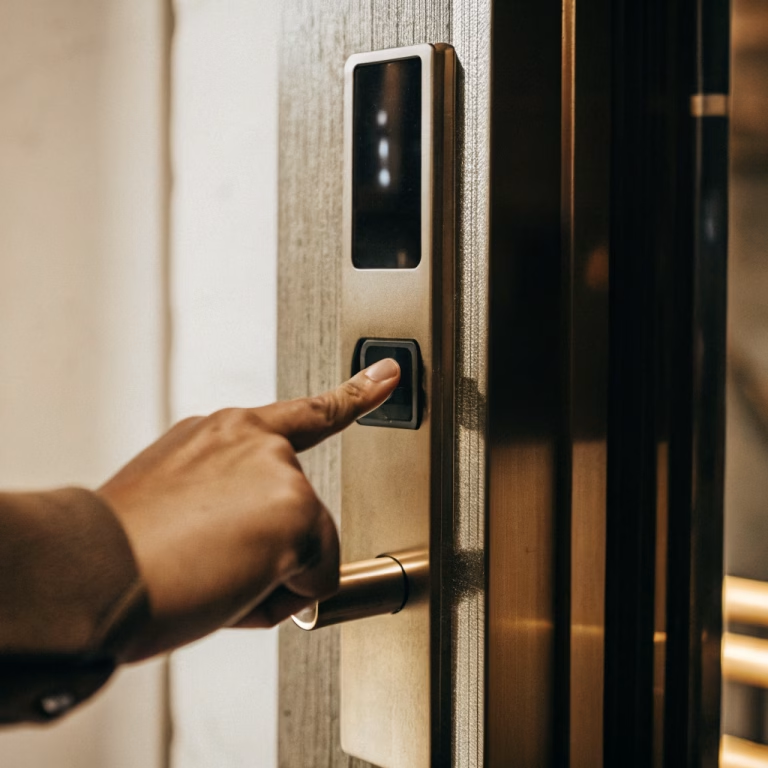
- Fingerprint access for fast personal verification
- PIN keypad entry for shared or code-based access
- Mobile app control for remote access and monitoring
- RFID or card access for hotels, offices, and managed properties
- Mechanical key override for backup access
- Apple Home Key or NFC credentials for smart ecosystem convenience
The right option depends on who will use the lock and how often credentials need to be managed or changed.
Connectivity
Connectivity also matters because it affects battery life, remote control, and integration.
Common options include:
- Bluetooth
- Wi-Fi
- Zigbee
- Z-Wave
- Matter-compatible platforms
For residential smart homes, ecosystem compatibility can be a major deciding factor. For commercial environments, network reliability and controlled access management are usually more important than consumer smart-home features.
User Management and Access Logs
For offices, rental properties, hospitality projects, and shared spaces, advanced user management is often essential.
Look for functions such as:
- temporary codes
- scheduled access
- multi-user permissions
- activity logs
- audit trail capability
These features help administrators maintain control while reducing the need for physical keys.
Battery and Backup Power
Battery performance is another important consideration.
Before purchasing, check:
- expected battery life
- low-battery alerts
- emergency charging options
- mechanical backup access
Most battery-powered smart locks operate for several months, but actual performance depends heavily on usage frequency and connectivity type.
👆 3. Understand the Differences Between Lock Types
Different access technologies offer different benefits. The best choice depends on convenience, traffic level, and management needs.
Fingerprint Locks
Fingerprint locks provide quick biometric access and eliminate the need to carry keys or remember codes.
Best for:
- homes
- luxury apartments
- private offices
Main advantage: fast and personalized access
Main consideration: sensor quality and fingerprint recognition reliability are critical
Keypad Locks
Keypad locks allow users to enter a PIN code for access.
Best for:
- apartments
- offices
- Airbnb rentals
- shared entries
Main advantage: simple and familiar operation
Main consideration: codes must be managed properly for security
App-Controlled Smart Locks
App-enabled locks connect to smartphones or cloud platforms for remote access and monitoring.
Best for:
- smart homes
- rental properties
- remote property management
- connected commercial spaces
Main advantage: remote control and visibility
Main consideration: performance depends on connectivity and software support
RFID or Card Access Locks
These are commonly used in commercial and hospitality environments.
Best for:
- hotels
- offices
- staff entrances
- managed buildings
Main advantage: efficient credential management
Main consideration: credential issuing and system compatibility should be planned carefully
Mortise vs Deadbolt Electronic Locks
The lock structure also matters.
| Lock Type | Typical Application |
|---|---|
| Electronic deadbolt | Residential doors |
| Electronic mortise lock | Commercial or premium residential doors |
In general, mortise electronic locks offer better structural strength, stronger long-term durability, and better suitability for commercial use.
🚪 4. Check Compatibility with Your Existing Door System
A lock can look perfect on paper and still fail in installation if compatibility is overlooked. This is where many projects run into unnecessary trouble.
Door Thickness
Always confirm the supported door thickness range. Residential and commercial doors may differ significantly.
Lock Preparation and Dimensions
Check all critical measurements, including:
- backset
- bore hole size
- mortise dimensions
- strike alignment
- handle or trim fixing points
Even small dimensional mismatches can lead to installation issues or poor fit.
Door Material
Not all electronic locks are suitable for every door type. Always verify compatibility with:
- wood doors
- steel doors
- aluminum doors
- glass doors
Existing Hardware System
If you are replacing an existing mortise, deadbolt, cylindrical, or multipoint lock, make sure the new electronic lock matches the original hardware preparation as closely as possible.
Smart System Compatibility
If smart integration matters, verify support for platforms such as:
- Apple Home
- Google Home
- Amazon Alexa
- SmartThings
- Matter
Incompatible platforms often create avoidable frustration after installation.
🛡️ 5. Verify Security Certifications and Durability Standards
The appearance of an electronic lock tells you very little about how well it will perform over time. Certifications and test data matter.
ANSI/BHMA Grades
For many projects, ANSI/BHMA grading is one of the most useful benchmarks.
| Grade | Typical Use |
|---|---|
| Grade 1 | Heavy-duty commercial use |
| Grade 2 | Residential and light commercial use |
If the lock will be used in a high-traffic commercial environment, Grade 1 is generally the safer choice.
Fire-Rated Compliance
If the opening is part of a fire door assembly, verify relevant fire-rating requirements and compatibility.
Weather Resistance
For exterior use, confirm:
- IP rating
- corrosion resistance
- UV stability
- weather sealing performance
This is especially important for coastal projects, exposed entrances, and humid climates.
Cybersecurity
Electronic locks are no longer just mechanical products. They are connected devices.
Important cybersecurity factors include:
- encrypted communication
- secure firmware updates
- user authentication controls
- protected cloud infrastructure
Weak software support can become a long-term security risk even if the hardware itself is strong.
Cycle Durability
For heavy-use environments, ask for cycle testing data. Commercial locks should be able to withstand high-frequency daily operation without rapid wear.
🏭 6. Evaluate the Supplier, Not Just the Product
Even a well-designed lock can become a poor purchasing decision if the supplier cannot provide stable quality or long-term support.
When evaluating an electronic door lock supplier, pay attention to:
- production capability
- quality control process
- certification reports
- test documentation
- firmware support
- app maintenance
- warranty terms
- replacement parts availability
- technical response speed
This is especially important for distributors, contractors, project buyers, and OEM customers who need consistent performance over time.
📌 7. Recommended Lock Types by Application
Below is a simple selection guide to match lock types with common project needs.
| Application | Recommended Lock Type |
|---|---|
| Smart home | Fingerprint or keypad smart deadbolt |
| Apartment | Keypad and app-controlled smart lock |
| Office | RFID or keypad access lock |
| Hotel | Card-access electronic lock system |
| Commercial building | Smart mortise lock |
| Rental property | App-controlled lock with temporary code management |
This kind of matching is often more useful than searching for a single “best” model.
💡 Practical Buying Insights
In real projects, a few patterns appear again and again:
- Fingerprint access is often the fastest and most convenient for daily users, but it should always include backup unlocking methods.
- Keypad locks work well for shared access where users do not need smartphones.
- App-controlled locks are ideal for remote property management but depend heavily on software stability.
- RFID and card systems remain highly practical for offices and hospitality settings.
- Commercial projects should prioritize structural durability, audit trail capability, and certification rather than consumer-style smart features alone.
- Long-term firmware and app support are just as important as the physical lock body.
A low-cost lock may look attractive at the beginning, but poor software maintenance, unstable electronics, or weak mechanical parts often create bigger costs later.
✅ Conclusion
The best electronic door lock for your project depends on how the opening will be used, who needs access, what level of security is required, and how the lock needs to integrate with the rest of the door and building system.
A smart buying decision should always include four steps:
- Define the application clearly
- Compare access methods and features
- Verify door and hardware compatibility
- Check certifications, durability, and supplier support
When selected properly, an electronic door lock can improve not only convenience, but also security, access control, and long-term project efficiency.