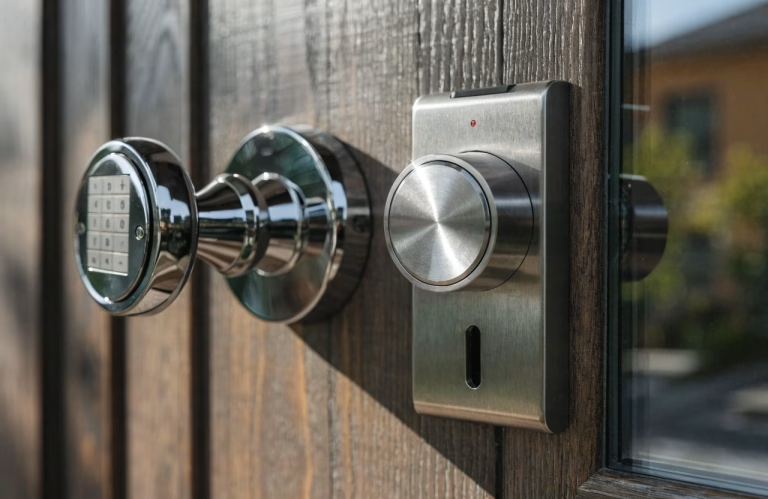
Smart locks are no longer limited to high-end residential gadgets. In modern door systems, they have become a practical access control solution across homes, apartments, offices, hotels, rental properties, and commercial buildings. A well-chosen smart lock can improve security, user convenience, credential management, and integration with connected building systems. But not all smart locks series are built for the same door, the same user workflow, or the same project environment.
For project buyers, distributors, architects, hotel operators, and smart hardware brands, the real question is not simply “which smart lock looks more advanced.” It is which smart lock category matches the door structure, access logic, traffic level, and security requirement of the application. This guide explains the main smart lock types, how fingerprint, keypad, app-controlled, and card-access systems differ, which use cases fit each category, and what features and certifications should be verified before specification or采购.
🔐 1. What Are the Main Types of Smart Locks?
Most smart locks in modern door systems can be grouped into four main categories. Many products combine two or more of these methods, but the underlying categories are still useful for selection.
Main categories
| Tipo de cerradura inteligente | Primary Access Method | Typical Strength |
|---|---|---|
| Fingerprint smart lock | Biometric recognition | Fast daily unlocking |
| Keypad smart lock | Introducción del código PIN | Fácil acceso compartido |
| App-controlled smart lock | Mobile app / Bluetooth / Wi-Fi | Remote control and automation |
| Card-access smart lock | RFID / NFC card or fob | Managed credential workflows |
These categories often overlap. For example, one lock may support fingerprint + keypad + app + mechanical key backup. In practice, the category still tells you the main user logic behind the product.
👆 2. How Do Fingerprint, Keypad, App-Controlled, and Card-Access Smart Locks Differ?
Different smart lock types solve different access problems. That is the core distinction.
Cerraduras inteligentes con huella dactilar
Fingerprint smart locks use biometric sensors to identify enrolled users.
Main characteristics
- desbloqueo rápido
- no code or phone required
- personalized user access
- convenient for frequent daily use
Best for
- viviendas unifamiliares
- apartamentos
- oficinas privadas
- proyectos residenciales de lujo
Main limitations
- sensor quality varies by product level
- wet, dirty, or worn fingers may affect recognition
- lower-cost models may provide inconsistent performance
Fingerprint locks are usually strongest when convenience for regular users is the top priority.
Cerraduras inteligentes con teclado
Keypad models unlock through PIN codes entered on a touchpad or physical keypad.
Main characteristics
- no smartphone required
- easy to share temporary or permanent codes
- practical for multiple users
- strong backup entry method
Best for
- viviendas
- propiedades en alquiler
- viviendas compartidas
- offices and utility rooms
Main limitations
- PIN codes can be shared too easily
- code management must be controlled
- repeated use may reveal common digits on some models
Keypad locks are often the most practical option where access must be shared among different people.
Cerraduras inteligentes controladas por aplicaciones
App-controlled locks connect through Bluetooth, Wi-Fi, Thread, Zigbee, or similar protocols and are managed through software.
Main characteristics
- bloqueo y desbloqueo a distancia
- intercambio de claves digitales
- registros de acceso
- automation integration
- control de estado
Best for
- hogares inteligentes
- gestión inmobiliaria a distancia
- Airbnb and rentals
- connected office access workflows
Main limitations
- user experience depends heavily on app quality
- remote features may require stable Wi-Fi or hub support
- cloud dependence may affect long-term reliability and battery life
App-controlled locks are best when access management and smart ecosystem integration matter more than simple standalone unlocking.
Card-access smart locks
Card-access locks use RFID cards, NFC cards, or key fobs to authorize entry.
Main characteristics
- fast tap-based access
- scalable credential management
- strong operational consistency
- suitable for centrally managed systems
Best for
- hoteles
- apartamentos con servicios
- oficinas
- employee-controlled commercial spaces
Main limitations
- lost cards need replacement or reprogramming
- cheaper RFID systems may offer weaker protection
- system value depends on backend management capability
Card-based locks are highly effective when access needs to be managed in volume, especially in hospitality and commercial applications.
🏠 3. Which Smart Lock Types Are Best for Residential, Commercial, and Hotel Applications?
The best smart lock category depends heavily on the use environment.
A quick application comparison
| Solicitud | Tipos de cerraduras inteligentes recomendadas | Priority Considerations |
|---|---|---|
| Residencial | Fingerprint, keypad, app-controlled | Convenience, backup access, smart home integration |
| Comercial | App-controlled, card-access, smart mortise locks | Audit trails, user control, durability |
| Hotel / Hospitality | Card-access, mobile credential systems | Guest management, centralized control, rapid credential change |
This table gives the short version. Below is the practical interpretation.
Aplicaciones residenciales
For residential use, the most common and effective options are:
- fingerprint smart locks
- keypad smart locks
- app-controlled smart locks
- combination models with multiple unlock methods
Residential users usually value:
- quick daily entry
- guest code creation
- facilidad de uso de la aplicación
- ecosystem compatibility with Apple, Google, or Alexa
- backup mechanical entry
For premium homes, fingerprint + keypad + app is often the strongest combination.
Aplicaciones comerciales
Commercial projects generally require more than convenience. They often need:
- permisos de usuario controlados
- logs or audit trails
- stronger mechanical durability
- compatibility with access systems
- reliable long-term support
This makes the following options more suitable:
- app-controlled smart locks
- card-access systems
- smart mortise locks
- project-grade connected locksets
In commercial use, the lock is part of an operational workflow, not just a door accessory.
Hotel and hospitality applications
Hotels prioritize:
- fast guest turnover
- credenciales provisionales
- centralized administration
- compatibility with property management systems
- minimal friction for guest access
For that reason, the most common choices are:
- Cerraduras con tarjeta RFID
- NFC/mobile credential systems
- hospitality-grade electronic lock platforms
Hotels still rely heavily on card-based systems because they are operationally efficient, familiar to guests, and easy to manage at scale.
🚪 4. How Can You Match a Smart Lock Type to the Door Structure?
A smart lock can have excellent features and still be the wrong product if it does not fit the door correctly.
Key door compatibility checks
Before selecting any smart lock category, verify:
- espesor de la puerta
- backset
- material de la puerta
- entrega
- bore hole format
- tipo de cuerpo de la cerradura
- estado del bastidor
- interior clearance
- whether the door uses deadbolt, mortise, or multipoint hardware
Common lock structures
Deadbolt smart locks
Usually best for:
- residential wood doors
- retrofit applications
- standard pre-bored doors
Deadbolt smart locks are among the easiest categories for home upgrades.
Mortise smart locks
Often best for:
- commercial aluminum doors
- premium residential systems
- offices and higher-spec projects
Mortise smart locks usually require more precise mechanical matching.
Multipoint-compatible smart locks
Required for:
- certain European-style doors
- patio or lift-slide doors
- specialized aluminum or uPVC door systems
Not every smart lock supports multipoint systems, so this must be checked early.
Why physical fit matters
Many installation failures are not caused by the electronics. They come from:
- wrong backset
- incompatible mortise body
- insufficient door thickness
- poor bore alignment
- incorrect door prep assumptions
In short, a smart lock still has to survive the very unglamorous reality of the actual door.
🛡️ 5. What Features and Certifications Should You Compare Before Selecting a Smart Lock System?
A smart lock should be evaluated as both a mechanical security device y un connected electronic product.
Funciones básicas para comparar
Before selecting a system, compare these practical features:
- métodos de acceso
- backup entry options
- duración de la batería
- alertas de batería baja
- sistema de alimentación de emergencia
- app quality
- access log capability
- temporary credential management
- alarma antisabotaje
- desbloqueo a distancia
- ecosystem compatibility
- soporte de actualización de firmware
Connectivity and ecosystem support
Depending on the project, check support for:
- Wi-Fi
- Bluetooth
- Hilo
- Zigbee
- Z-Wave
- Materia
- Apple Home
- Google Home
- Amazon Alexa
- SmartThings
- PMS or access-control software, where relevant
For consumer and mixed-use projects, Matter and Thread are becoming especially important because they improve interoperability and often support better battery efficiency.
Clasificaciones ANSI/BHMA
Mechanical certification remains highly important.
| Grado | Typical Use Level |
|---|---|
| Grado 1 | High-security or heavy-use commercial applications |
| Grado 2 | Strong residential or light commercial use |
| Grado 3 | Standard residential use |
ANSI/BHMA grades help evaluate:
- durabilidad
- resistencia a la entrada forzada
- cycle performance
Comprobaciones de ciberseguridad
For digital security, verify whether the supplier provides clear information on:
- AES or equivalent encryption
- TLS-secured communication
- almacenamiento seguro de credenciales
- anti-tamper protections
- bloqueo por intento fallido
- política de actualización del firmware
- vulnerability response and software maintenance
If a supplier only says “high security” without technical clarity, that is marketing, not evidence.
🌧️ 6. What Durability Factors Matter for Long-Term Use?
Smart locks live at the intersection of hardware, electronics, and daily wear. So durability matters more than spec sheets sometimes suggest.
Material and environmental checks
For long-term performance, compare:
- housing material
- finish quality
- resistencia a la corrosión
- Resistencia a los rayos UV
- sellado contra la intemperie
- IP rating where applicable
- cycle-life testing
- motor and clutch reliability
Typical material choices
Acero inoxidable
Lo mejor para:
- puertas exteriores
- ambientes húmedos
- commercial use
- higher-durability applications
Aleación de zinc
Commonly used for:
- cerraduras inteligentes para viviendas
- interior and standard sheltered applications
Consideraciones sobre el uso exterior
If the lock is used outdoors, especially in demanding climates, verify:
- resistencia a la intemperie
- coating quality
- battery performance under temperature variation
- protección contra la corrosión
- external emergency power access
A smart lock that works beautifully in a showroom but complains during rain or heat is not a serious project solution.
📋 7. A Practical Workflow for Choosing the Right Smart Lock Category
The simplest way to choose correctly is to follow a structured workflow.
Proceso de selección recomendado
- Identify the application
Residential, office, rental, hotel, apartment, or commercial building - Define the preferred access logic
Fingerprint, PIN code, app control, RFID card, or multi-access combination - Check the door structure
Deadbolt, mortise, multipoint, door thickness, backset, and material - Confirm ecosystem or software needs
Smart home platform, PMS integration, access control platform, or cloud management - Review security and durability requirements
ANSI/BHMA grade, encryption, firmware support, cycle life, weather resistance - Test a sample on the real door system
Verify fit, unlocking speed, battery expectations, and user experience before large-scale purchasing
This process helps reduce the most common project issues: poor compatibility, weak support, and feature mismatch.
Conclusión final
The main types of smart locks for modern door systems include fingerprint smart locks, keypad smart locks, app-controlled smart locks, and card-access smart locks. Each category supports a different access logic and serves different project needs.
For the best selection outcome, buyers should:
- match the lock category to the application
- verify door structure compatibility early
- compare both mechanical and digital security features
- review ANSI/BHMA grades and software support
- prioritize durability, ecosystem fit, and supplier reliability
A properly selected smart lock system can improve access control, convenience, operational efficiency, and building security, but only when the product fits both the door and the real-world access workflow behind it.