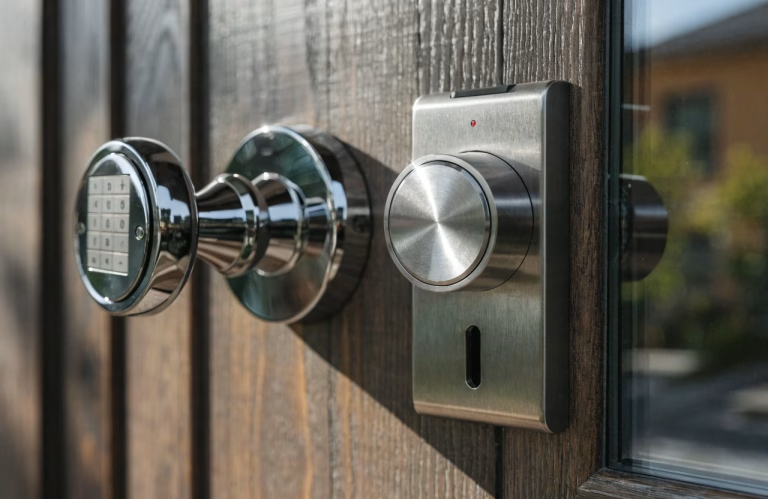
Selecting the right cerradura con lector de huellas dactilares is no longer just about keyless entry—it’s about integrating security, hardware reliability, and smart access control into one complete system. For distributors, developers, and project contractors, the decision must balance biometric performance, door compatibility, durability, and supplier capability.
Below is a practical, specification-driven guide tailored for commercial and residential projects.
1️⃣ How a Fingerprint Door Lock Works
A fingerprint lock uses biometric authentication technology to verify user identity and grant access.
🔐 Working Process
- Finger is placed on the sensor
- Sensor captures and converts fingerprint into a digital template
- System compares it with stored data
- Match confirmed → motor unlocks door
🧠 Core Technologies
- Capacitive sensors → higher security, detects live skin
- Optical sensors → cost-effective, image-based
- Semiconductor sensors → fast, high accuracy
✅ Key Advantages
- Keyless access (no lost keys)
- Fast authentication (<1 second)
- Multi-user management
👉 For projects, this means better access control efficiency and reduced operational risk
2️⃣ Key Features to Compare (Residential vs Commercial)
When sourcing fingerprint locks, compare both hardware and software capabilities.
🔍 Essential Feature Checklist
🔐 Security
- Multi-access modes (fingerprint + PIN + card + app)
- Anti-tamper alarm
- Auto-lock function
- Mechanical key override (mandatory for projects)
⚡ Performance
- Recognition speed: <1 second
- Low false acceptance rate (FAR)
- User capacity:
- Residential: 20–100 users
- Commercial: 100–1000+ users
🔋 Power System
- Battery-powered (AA or lithium)
- Aviso de batería baja
- Emergency USB power backup
📱 Connectivity
- Bluetooth / Wi-Fi / Zigbee
- Integration with smart ecosystems
🏢 Project Insight
| Característica | Residential Focus | Commercial Focus |
|---|---|---|
| Access control | Básico | Advanced (multi-user) |
| Logs | Opcional | Required |
| Integration | Hogar inteligente | Access control system |
| Durabilidad | Medio | Heavy-duty |
3️⃣ Ensuring Compatibility with Your Door System
Fingerprint locks must match the door structure and existing hardware configuration.
📏 Key Factors to Check
🚪 Door Type
- Wooden doors → easiest installation
- Aluminum/uPVC → requires multipoint lock compatibility
- Glass doors → require specialized smart glass locks
📐 Door Thickness
- Typical range: 35–55 mm
- Always verify product specifications
🔧 Lock Body Type
- Mortise lock (most common for smart locks)
- Multipoint lock (for aluminum systems)
- Rim lock (retrofit solutions)
⚠️ Common Mistakes
- Ignoring door thickness
- Mismatch with existing lock system
- Insufficient internal space for electronics
4️⃣ Durability & Hardware Quality
Even with advanced electronics, mechanical performance remains critical.
🧱 Recommended Materials
| Component | Material |
|---|---|
| Lock body | Acero inoxidable |
| Handle | Zinc alloy / aluminum |
| Internal parts | Acero templado |
🔬 Performance Indicators
- Cycle testing: 100,000–300,000 cycles
- Stable motor performance
- Wear-resistant finishes (PVD, powder coating)
🌧️ Environmental Protection
- IP rating (IP54+ for outdoor use)
- Corrosion resistance (especially coastal or humid areas)
5️⃣ Data Security & Privacy (Critical for Smart Locks)
Fingerprint locks must comply with modern cybersecurity requirements.
🔐 What to Verify
- Encrypted fingerprint storage (AES or equivalent)
- Local storage preferred (not cloud-based raw data)
- Secure firmware updates
- Anti-hacking protection
🧠 Best Practice
👉 Choose systems that store biometric data locally in encrypted form to reduce risk
6️⃣ Supplier Evaluation for Bulk Purchasing
For B2B buyers, supplier capability is just as important as product specs.
🏭 Supplier Checklist
- Certifications: CE, FCC, RoHS
- Test reports (durability + security)
- Smart system support (apps, API, integration)
- Customization capability (OEM/ODM)
- Stable supply chain
🚚 Project Support Requirements
- Technical drawings & installation manuals
- Sample testing before mass order
- Disponibilidad de piezas de recambio
- After-sales service & firmware updates
7️⃣ Flujo de trabajo práctico para la selección
✅ Step-by-Step Process
- Define application (residential / commercial)
- Confirm door specs (material, thickness, lock type)
- Select compatible lock structure (mortise / multipoint)
- Compare biometric & smart features
- Verify durability and certifications
- Evaluate supplier reliability
- Test samples before bulk purchase
8️⃣ Pro Tips for Project Success
- Always include accionamiento por llave mecánica
- For commercial projects → prioritize access logs & system integration
- Avoid low-cost locks with weak sensors or poor software
- Combine with:
- sistemas de control de acceso
- CCTV
- sistemas de alarma
👉 This creates a complete smart security solution, not just a standalone lock
✅ Summary
Choosing the right fingerprint door lock requires balancing:
- Biometric accuracy & speed
- Door compatibility & installation requirements
- Mechanical durability & material quality
- Data security & encryption
- Supplier reliability & project support
A well-selected system delivers secure, keyless access, improved user experience, and scalable smart control—making it ideal for modern residential and commercial developments.
PREGUNTAS FRECUENTES
Q1: How secure are fingerprint door locks?
Fingerprint locks are highly secure when they use encrypted data storage, anti-tamper features, and multi-factor access options.
Q2: Can fingerprint locks work on all doors?
Most work on wooden doors, but aluminum, glass, and multipoint systems require compatible lock designs.
Q3: What happens if the battery dies?
Most locks include low-battery alerts and emergency power backup (USB) or mechanical key override.
Q4: Are fingerprint locks suitable for commercial projects?
Yes, especially models with high user capacity, access logs, and system integration capabilities.
Q5: What should I check before bulk purchasing?
Verify certifications, durability testing, cybersecurity features, and request samples for real installation testing.